Illegal mining isn't fought alone: coordination across agencies
Behind every illegal mine intervened is more than a military operation: there is coordination among the Defense sector, Migración Colombia, the Ministry of Transportation, and the Ministry of Mines, aimed at understanding the phenomenon from every angle.
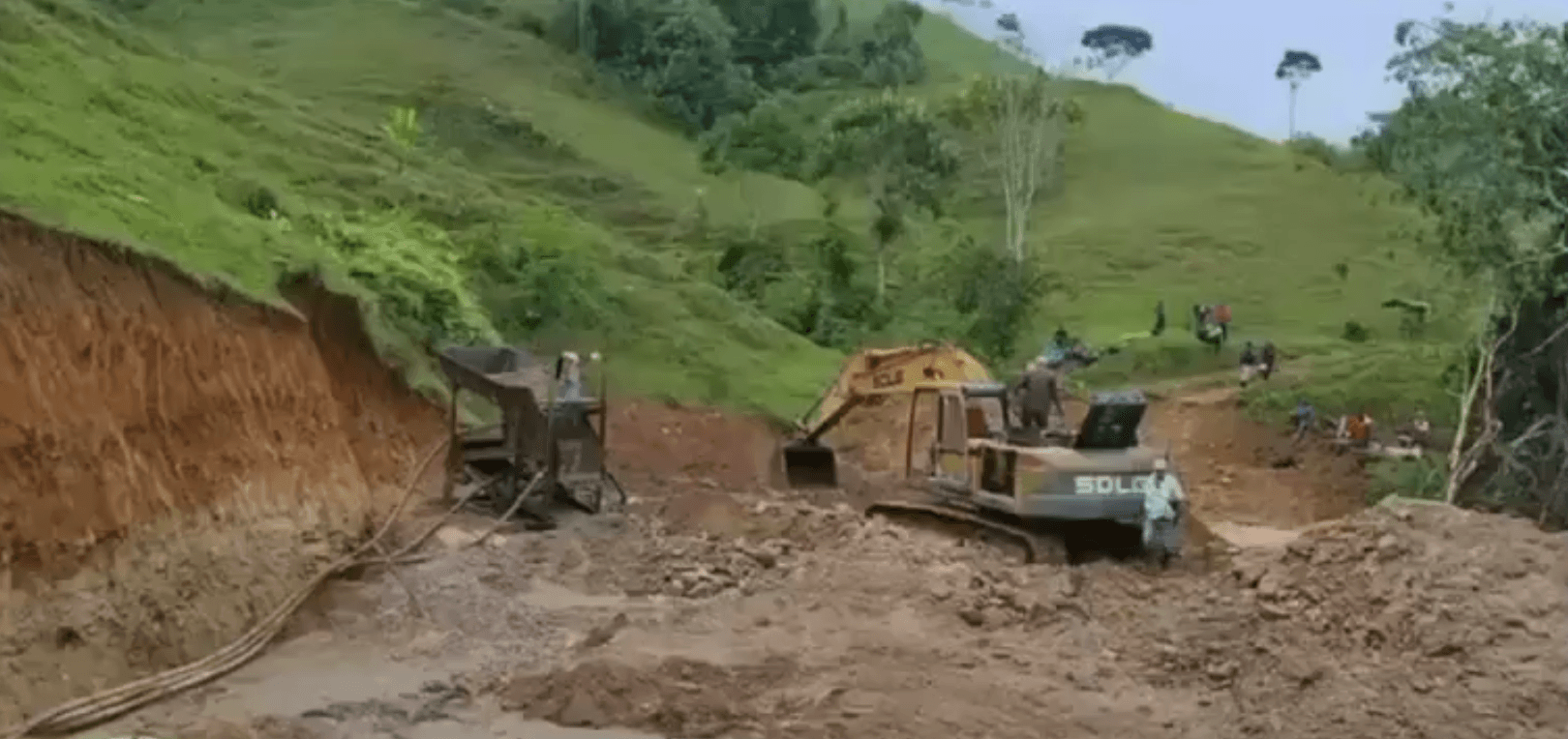
Illegal mining isn't a static phenomenon: it changes shape, moves across territory, and uses different types of machinery, from river dredges to heavy extraction equipment. That's why the Public Force has sought to sit down with other State agencies to better understand the phenomenon before confronting it.
In this administration, we coordinated work with Migración Colombia, the Ministry of Transportation, and the Ministry of Mines and Energy, among others, to address illegal mining from different angles: controlling migration flows associated with this economy, the transport of illegally extracted minerals, and regulation of the formal mining sector.
The result shows up in departments like Antioquia, Chocó, and Nariño, where illegal mining hits hardest. Even so, we recognize the Public Force cannot sustain this effort alone: every military intervention needs support from other agencies so that recovered territory doesn't fall back into the same illegal economy.
Part of that pressure shows up in the destruction of the machinery these mines run on: between 2022 and 2026, 7,098 dredges and extraction rigs were seized or destroyed, a 70.7% increase compared to the previous government period (4,158) and 170.3% compared to the 2010-2018 period (2,626). As we've said: illegal mining isn't just an environmental crime, it's also the main source of income for criminal organizations, which is why targeting its machinery means targeting its financing capacity directly.