Coca: why 99.77% free doesn't mean the problem is solved
Colombia held back the growth of coca crops over the past four years and is now showing a recent decline, but the Ministry itself warns that eradicating without substitution is, in its own words, like collecting water in a bucket full of holes.
99.77% of Colombian territory is free of coca crops. The 253,358 hectares still under cultivation represent just 0.23% of national territory, a figure that contrasts with the perception of a country "flooded" with coca, which in this administration we largely attribute to disinformation.
The behavior of these crops, however, hasn't been linear. During the previous government (2018-2022), the cultivated area grew 69%, about 89,467 additional hectares. During this government period, growth was much smaller, 16% (35,112 hectares), and in recent months a decline was recorded for the first time: 8,821 fewer hectares.
Against those who attribute record cocaine seizures to a simple rise in production, in this administration we have insisted on a different argument: we held back the growth of cultivation, and we've already begun reversing it, though we acknowledge the goal of reducing 40,000 hectares through substitution hasn't been met yet.
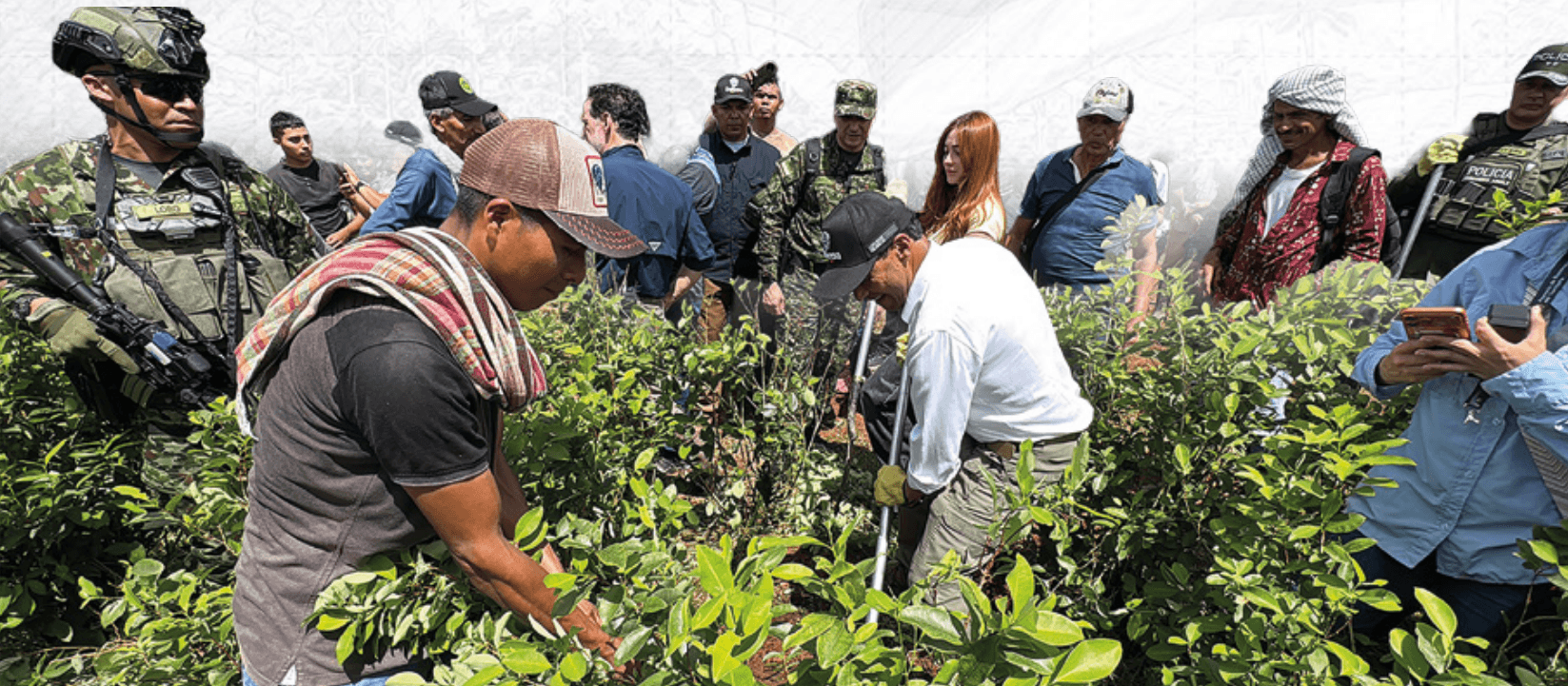
We have also been candid about the limits of forced eradication as the only tool. In 2020, for example, more than 100,000 hectares of coca were manually eradicated, and yet, by the following year, the cultivated area had climbed to 174,000 hectares: the reason is that the police officer or soldier who eradicates can't stay indefinitely in the same spot guarding against replanting, because they have other operations to attend to. Eradicating without a substitution program aligned with communities is, as we've put it in this administration, like collecting water in a bucket full of holes.
That's why the recommendation we're leaving for the next government isn't simply to keep eradicating: it's to better align crop substitution with communities, and to make use of technology like the drones we're leaving available, to make that work more efficient.