The Jaguar rifle and the test that will decide it
The Military Industry designed an assault rifle with entirely Colombian engineering. In September 2026 it enters operational testing by the Armed Forces and the Police; procurement depends on that technical assessment.
100% Colombian design and engineering
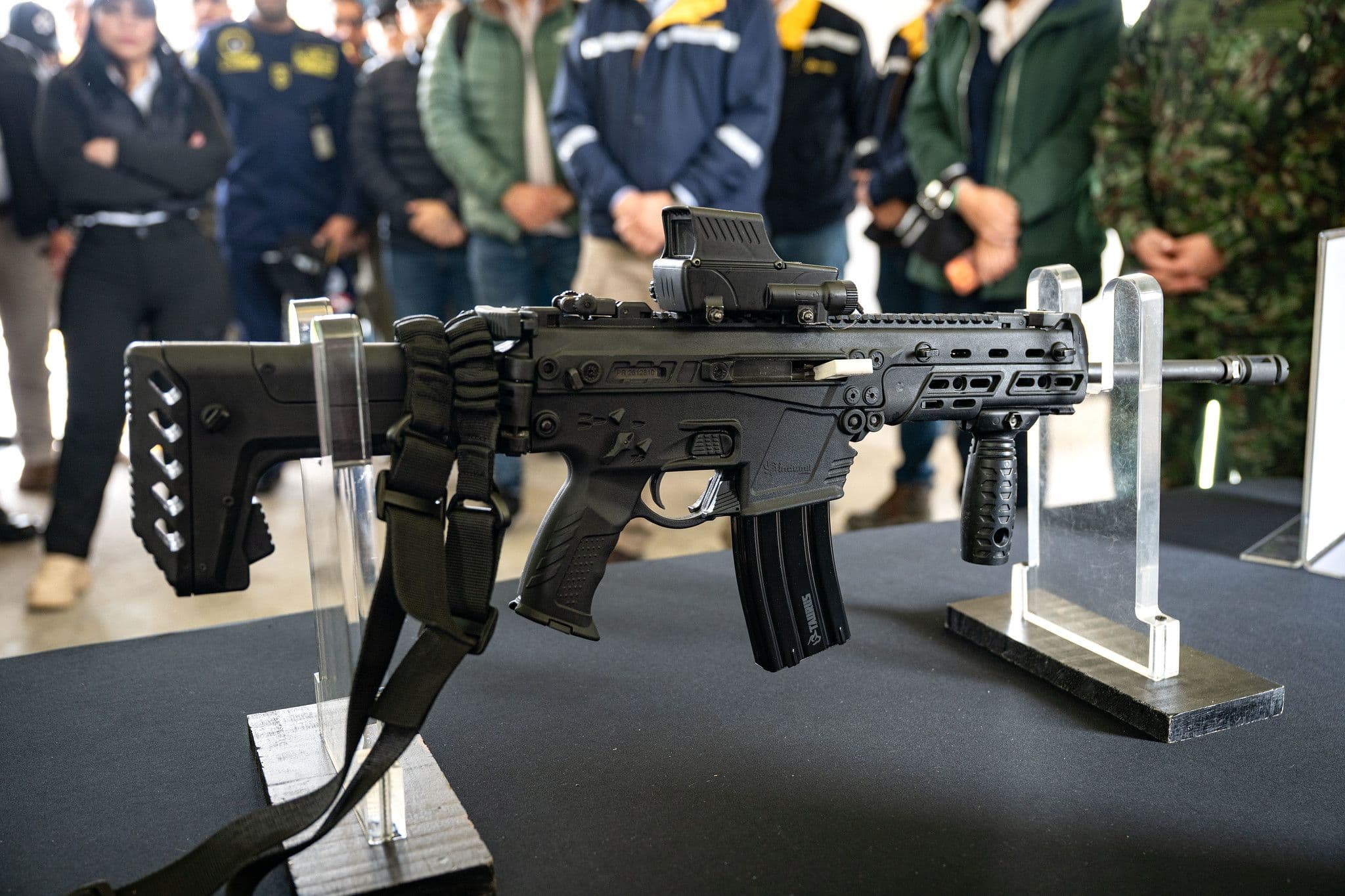
The Jaguar rifle is, to date, the most ambitious weapons development Colombia's Military Industry has attempted: an assault rifle designed entirely by Colombian engineers and unveiled publicly in 2026 at a ceremony led by the President alongside the military high command and the Minister of Defense. Its significance is not only the weapon. It is that Colombia has manufactured rifles under foreign licence for over three decades, and this is the first design that belongs to no one else.
What stands between prototype and issue weapon
The project is mature but not finished, and precision matters here. The Armed Forces and the National Police identified technical adjustments, which the Military Industry incorporated; with those changes, the rifles are due to be handed over for operational testing in September 2026. Those tests will produce a technical assessment determining whether the weapon is viable for procurement. Until then, if the Forces need weapons urgently and hold the budget for them, the company's own recommendation is that they buy through the appropriate channel, and that the Jaguar's future be settled afterwards on technical and objective grounds.
The barrel bottleneck
One detail explains what industrial sovereignty actually depends on. Barrels for rifles built in Colombia have been purchased from Israel for a little over thirty years — not because they are technically hard to make, they are not, but because the technology transfer agreement signed at the time set that purchase as the mechanism for controlling production and compensating the knowledge transferred. The Military Industry is now assessing the purchase of its own barrel line; with the machinery custom-built, roughly two years would pass between contract signature and commissioning, during which imports would continue.
Why domestic manufacture matters
The company's argument is not only strategic but economic: when national capability exists and the purchase is still made abroad, jobs are exported. It is a reasonable case and also a genuine tension, because the Forces need proven equipment on operational timelines, not industrial promises. The Jaguar rifle is precisely where those two legitimate claims meet, and September's testing is the institutional way of settling them.