Two naval programmes, six thousand jobs
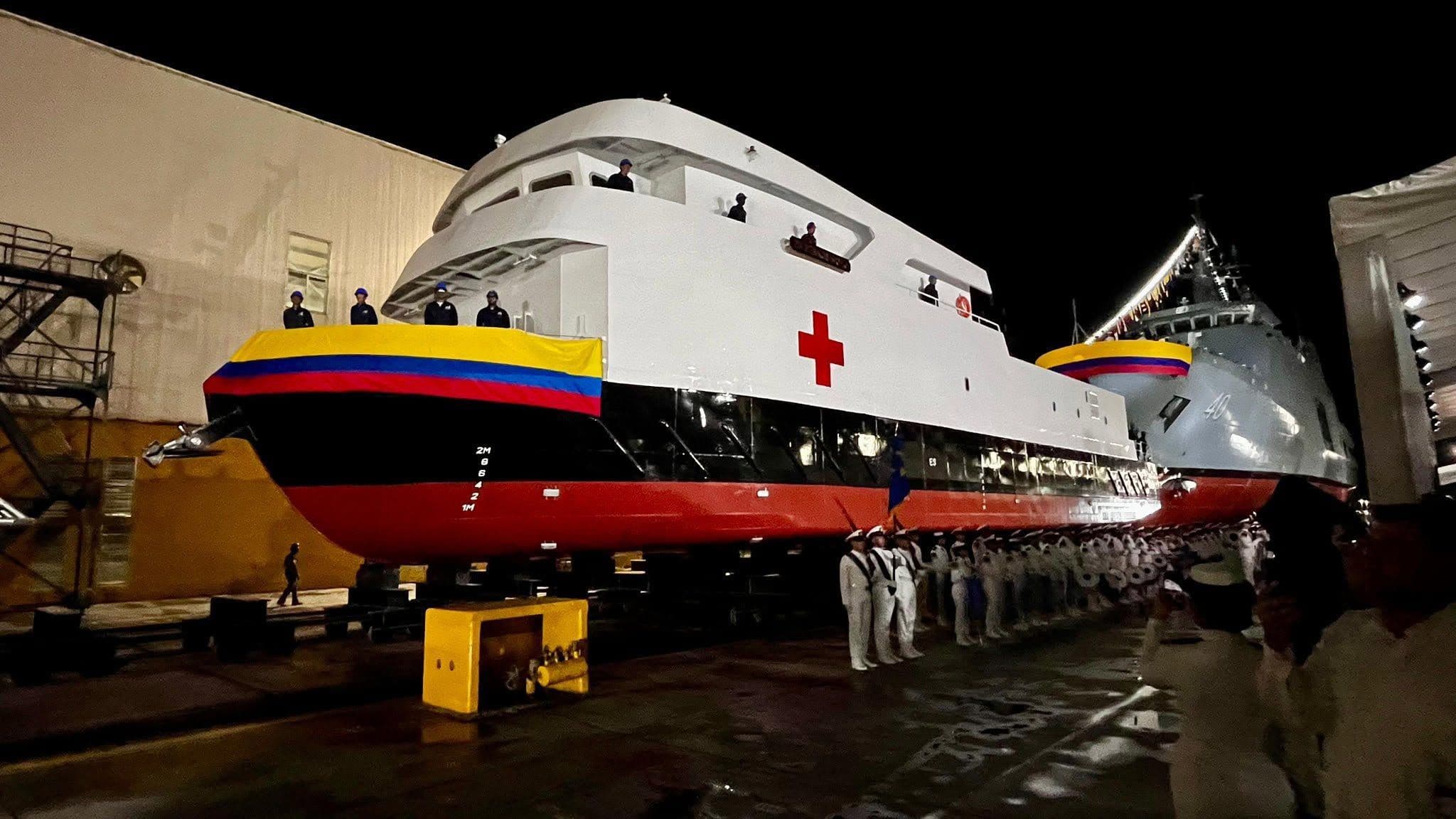
An ocean patrol vessel and a coastal-riverine health centre generated 1,568 direct jobs, 4,704 indirect jobs, and brought 433 national suppliers into the defense sector's naval supply chain.
In November 2022 the defense sector's naval corporation and the Colombian Navy signed the largest joint shipbuilding process ever recorded in the country. That agreement set in motion the programmes that now make it possible to measure, with official figures, what a public shipyard produces beyond the vessels it delivers.
The two programmes and what they moved
The Colombian Ocean Patrol Vessel programme generated 1,114 direct and 3,342 indirect jobs, and brought in 274 national suppliers. The coastal and riverine Primary Health Care Centre programme generated 454 direct and 1,362 indirect jobs, with 159 national suppliers. Together they sustain 1,568 direct and 4,704 indirect positions — 6,272 in all — and put 433 Colombian firms to work inside a chain that until recently was imported almost whole.
Three jobs outside for every one inside
The ratio between direct and indirect employment — one to three in both programmes — is the signature of shipbuilding. A ship is not built by a shipyard alone: it is built by machining shops, platework, industrial coatings, marine electrics, cabling, systems and logistics, spread across dozens of firms orbiting the dock. Almost none of those trades relocates offshore and almost all are learned in the yard itself, which turns each programme into a technical training centre appearing in no education budget.
One yard, two different needs
The two programmes capture what a public naval industry is for. One produces a blue-water patrol unit: military capability in the strict sense. The other produces health infrastructure for the coast and the rivers, reporting a beneficiary population of 154,989. Same industrial hall, same supplier chain, same trades, applied to two needs the country usually treats as unrelated. The Logistic Support Ship and the Strategic Surface Platform — the programme for the country's first frigate — belong to that same line of work.