NATIONAL ANTI-DRONE SHIELD: THE FACTS
On August 29, 2026, El Colombiano published an article on the National Anti-Drone Shield that mixes technical assessments with strategic defense agendas and, further, misreads budget figures.
The information was quickly amplified on social media, spreading the inaccuracies further.
Out of respect for public opinion, here are the facts.
NATIONAL ANTI-DRONE SHIELD
This project began in January 2026 to strengthen and complement existing capabilities against the growing threat posed by drones. Although the Security Forces can detect and neutralize roughly 90% of drone attack attempts, these attacks are becoming more frequent, have spread geographically, and carry a greater potential and likelihood of causing harm.
An initial estimate by the Ministry of Defense put the cost of the National Anti-Drone Shield at more than COP 6.2 trillion, to be implemented in phases. For 2026, a first phase of COP 1 trillion was projected, later adjusted to COP 800 billion due to structural budget constraints.
An investment of this scale required rigorous technology scouting to identify and evaluate tactical, semi-fixed, and fixed anti-drone capabilities suited to Colombia's specific context. Once completed, the process would move into the pre-contractual and contractual stages.
WHO CONDUCTED THE TECHNOLOGY SCOUTING, AND WHO WOULD HAVE AWARDED THE CONTRACT?
Technical responsibility rested with a team of more than 20 uniformed members of the Military Forces and the National Police. Since this capability was intended for the entire Security Forces, an Army brigadier general was appointed functional manager, alongside project managers from each Force and the Police, and members of the corresponding technical, legal, and financial committees.
The technology scouting process ran through the first seven months of 2026. The technical committee operated with autonomy and technical independence; its members underwent polygraph protocols, and the entire process was accompanied by the transparency mechanisms of the Ministry of National Defense.
When two or more Forces acquire the same capability, procurement is centralized under the General Secretariat of the Ministry of National Defense to achieve standardization, economies of scale, and better negotiating terms. In this case, the spending authority for any eventual contract would have been the General Secretary.
Accordingly, neither the Minister of Defense nor the vice ministers were part of the technical committee, nor did they hold spending authority for any eventual contract.
HOW MANY COMPANIES AND SOLUTIONS WERE ASSESSED?
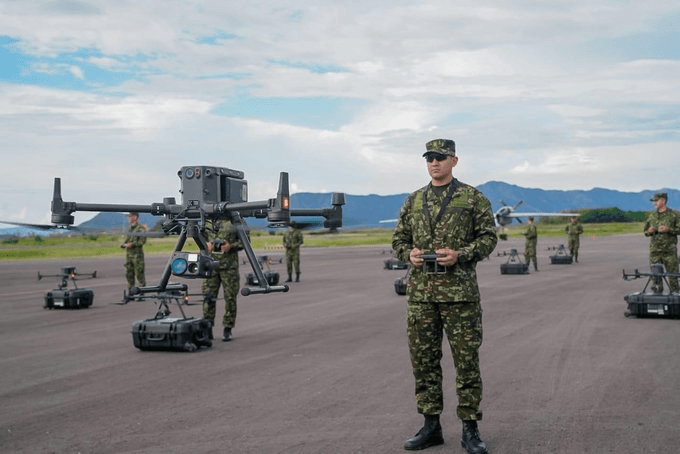
119 companies from 21 countries expressed interest in participating. Starting in early 2026, they were invited to test their solutions in Colombia during March and April, under scenarios similar to actual threat conditions. The initial timeline called for moving into the pre-contractual stage afterward and awarding a contract between June and July.
However, the results forced a revision of the timeline. Many companies did not attend and instead submitted the technical specifications of their solutions; others reported they could not import their systems into Colombia within the required timeframe.
Only some companies brought their products into the country. The Security Forces' technical evaluators determined that the specifications advertised in technical sheets and marketing materials did not fully match the test results, nor did they fully meet the operational need.
Given these results, technology scouting continued in the home countries of interested companies that, due to time or logistical constraints, could not bring their equipment to Colombia.
WHO CONDUCTED THE TECHNOLOGY SCOUTING ABROAD?
Technology scouting abroad was conducted by members of the technical committee — uniformed personnel from the Military Forces and the National Police — accompanied by designated Ministry of National Defense staff to help ensure the transparency of the process.
Solutions were evaluated in the United States, Spain, France, Poland, Thailand, India, and Lithuania.
These technical committee missions should not be confused with the strategic defense agendas carried out by senior Ministry of Defense officials. These are activities of a different nature, purpose, and scope.
The defense sector's strategic agendas are part of Colombia's foreign policy. In 2026, they included official visits by senior Ministry of Defense officials to Qatar, Turkey, India, the Czech Republic, Germany, France, the United States, and Spain, among other countries.
These agendas were aimed at strengthening international cooperation on security and defense, exploring cutting-edge technology options for the Security Forces, promoting alliances to build strategic capabilities, and advancing international initiatives against transnational crime, among other objectives.
WHAT DID THE COMMITTEE CONCLUDE?
The committee's conclusion was clear and unequivocal:
"None of the solutions evaluated fully met the defined operational need [...]. Recommending an acquisition under those conditions would mean accepting capability gaps and transferring operational, technical, integration, and sustainment risks to the State."
The committee also noted that the technology scouting process helped reduce uncertainty and support the decision with objective evidence before committing public resources and operational capability. It further recommended completing the technology scouting process, keeping the operational need in force, preserving the multilayer architecture, and continuing to structure and manage the required resources.
In national defense, urgency must never become improvisation. Following this technical recommendation does not mean public resources "vanished." It means exactly the opposite: protecting them. The results of the technology scouting process and the committee's conclusion required revising the originally planned timeline before moving toward an acquisition.
The assessments, findings, and conclusions were documented to support the project's continuity. However, the incoming government's decision not to hold a formal transition briefing limited the direct transfer of the knowledge accumulated on this strategic capability, one of urgent necessity for national security.
Today, above any controversy, what truly matters is that Colombia continues to responsibly advance the structuring and acquisition of this capability against a threat that keeps evolving. This project must be given the highest priority — not to defend an administration or a past decision, but to protect the lives of our soldiers, police officers, and citizens.
IS THE NATIONAL ANTI-DRONE SHIELD BUDGET PART OF THE COP 13 TRILLION UNDER CONPES?
No. The budget planned for the National Anti-Drone Shield is not part of the COP 13 trillion secured under CONPES 4187 of 2026. Those resources correspond to the strengthening of other strategic defense sector capabilities, with future budget commitments starting in 2027 and continuing over the following eight years.
The COP 800 billion planned for the National Anti-Drone Shield in 2026 corresponded to additional resources, whose transfer was conditional on the technical committee identifying the capabilities and solutions needed to responsibly move forward with the acquisition. Since the technology scouting process concluded without identifying solutions that fully met the operational need, these resources were not transferred for the Shield's procurement.
Accordingly, it is now the responsibility of the current Government to secure the resources needed to continue the project, as stated in the management report, in the handover document, and as communicated publicly on several occasions.
A NECESSARY REFLECTION
Freedom of the press is an essential pillar of any democracy. So are rigor, precision, and responsibility in reporting.
In the digital age, inaccurate information can spread within seconds, while correcting it takes far longer. Its effects on trust, reputation, and good standing can persist even after the facts have been clarified.
Public criticism and scrutiny are necessary. So is rigorous information.
Citizens have the right to receive truthful and impartial information, and individuals and institutions have the right to have their reputation and dignity respected.
"Truth must not be mistaken for the opinion of the majority."
—Jean Cocteau