Without a handover, the truth remains incomplete
A government transition is like a shift handover between doctors. The one taking over doesn't just need the medical chart. They need to hear from the outgoing team, to understand the diagnosis, the treatment and the patient's condition. The difference is that, in this case, the patient is called Colombia.
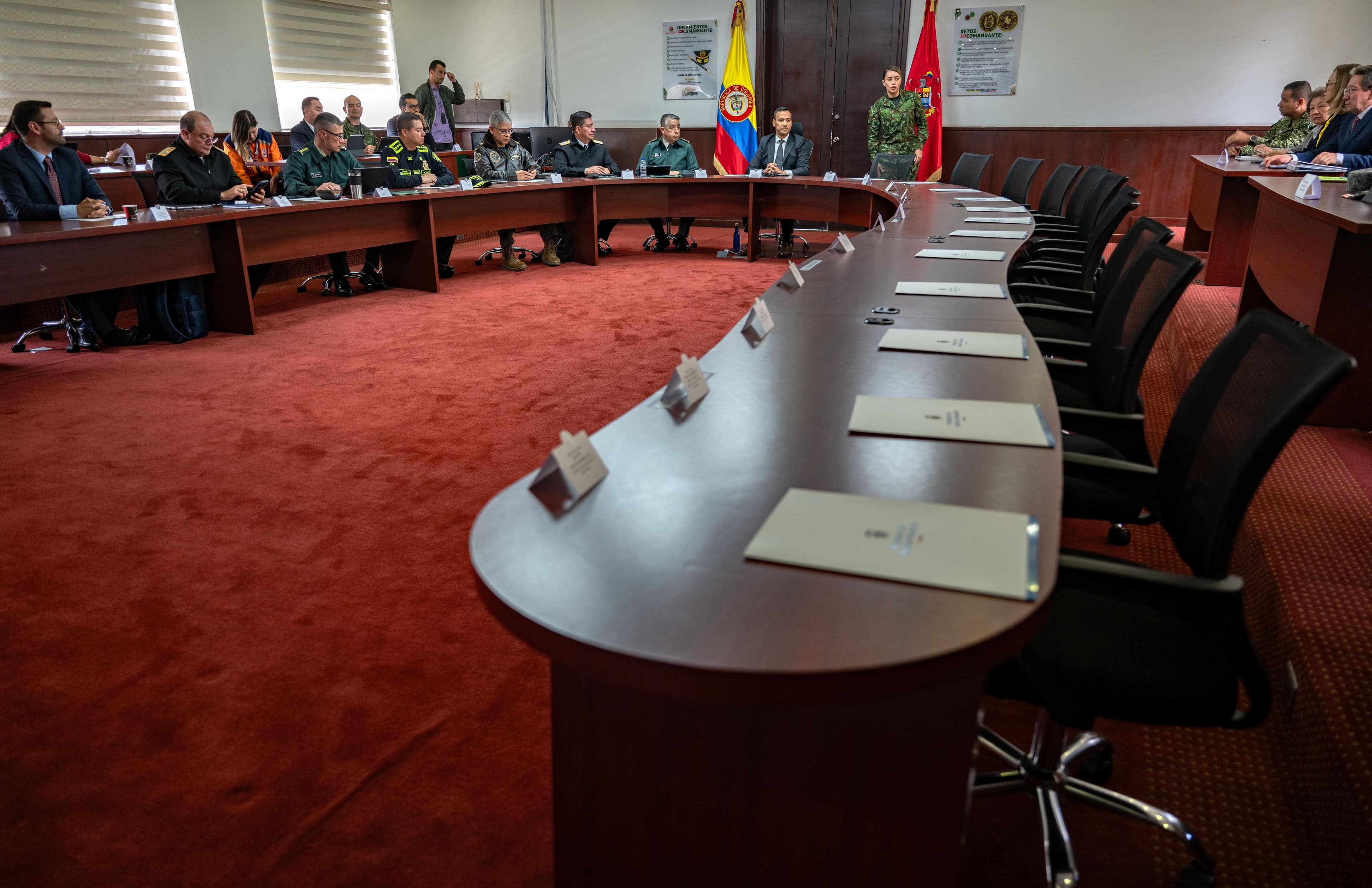
A responsible, professional and transparent transition of government requires a handover. It allows those taking office to learn first-hand what has been done, why it was done, which problems persist and which decisions are urgent and cannot wait.
In the Defense sector, that interaction matters even more. Whoever assumes its leadership must know and understand technical and strategic information — classified and sensitive — that can hardly be conveyed in documents.
When the incoming government decided to suspend the handover on July 7, 2026, that opportunity was lost. Seeking to understand the details of such a broad and complex sector primarily through a formal information request containing 666 questions increased the risk of reaching incomplete, imprecise or decontextualized conclusions.
The Informe de la Verdad (Truth Report) contains several such inconsistencies The document has five chapters. Chapter 3 presents findings related to alleged acts of corruption and records one case corresponding to the Defense sector.
Case 14: CODALTEC
The report states that CODALTEC entered into a contract to acquire a counter-drone system for approximately COP 60.3 billion, and that it formed part of what is known as the Escudo Nacional Antidrones (National Counter-Drone Shield), whose first phase was projected at more than one trillion pesos.
It also mentions that observations were found regarding costs, detection range, system configuration and jamming mechanisms, among other aspects, which were brought to the attention of the competent authorities to determine whether any liability exists.
However, a report of such strategic importance requires precision and context. Although the report does not expressly identify the contract number, its characteristics suggest it refers to the one entered into between CODALTEC and the National Army in June 2025.
If so, three important points need to be clarified.
The first is its value: the final value of the contract was COP 81.3 billion, not COP 60.3 billion.
The second is its context: that contract was signed in 2025 and does not correspond to the Escudo Nacional Antidrones, an initiative that emerged later, in 2026.
The third is what was acquired. The equipment purchased under this contract is designed to address certain types of threat. But neither that equipment nor any other in the world constitutes, on its own, a comprehensive counter-drone capability.
If there are doubts, let them be investigated. If there is liability, let it be established. In this case, however, the report does not specify which findings would constitute the alleged acts of corruption. What is clear is that the absence of a direct handover increased the risk of imprecision and lack of context, which can lead to a mistaken interpretation of how Colombia has been strengthening its capacity to confront this threat.
A piece of equipment is not a comprehensive capability
Effective protection against drones requires integrating several pieces of equipment and technologies for detection, identification, tracking and jamming, along with active and passive measures, command and control systems, training, operational procedures and even a regulatory framework governing their use and commercialization.
For that reason, a much broader strategy known as the Escudo Nacional Antidrones was launched in 2026. One of its lines of action consisted of identifying and acquiring the best technologies available in the world.
For more than seven months, technical teams from the Army, the Navy, the Aerospace Force and the Police carried out an exhaustive technology assessment. In that process, technologies from 119 companies in 21 countries were evaluated.
The analysis led to three important conclusions: there is no solution that is 100% effective; no single company holds all of the best solutions identified; and Colombia requires a differentiated solution based on a multilayered architecture, given the particular nature of the threat.
A threat that cannot wait
Drones have drastically transformed contemporary conflicts. Their technological capacity to cause harm is evolving faster than many of the available countermeasures.
The government has changed, but the threat remains. The government has the responsibility to build on what has been created, secure the funding for the first phase in 2026 — estimated at one billion pesos (COP) — structure the necessary processes and acquire the best available capabilities with speed, technical rigor and absolute transparency.
Until the very last day, we expressed our willingness to carry out a handover marked by transparency, legality and professionalism. That exchange would have made it possible to clarify many of these concerns in good time and to avoid the loss of valuable time and effort in protecting the country.
Political controversies can wait. Colombia's counter-drone capability cannot.